
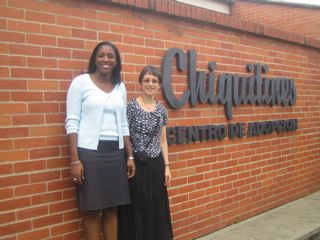
Last month, Helene Lauffer, associate executive director, and Samantha Walker, assistant director for international adoption, traveled to Colombia to meet with staff from all the adoption houses with which Spence-Chapin works to place children. Here, Helene shares the highlights of their trip.
For Samantha and I, it was our first time visiting Colombia. Upon our arrival, we were met by our Colombian representative, Manuela Fonnegra de Michelsen, who whisked us into Bogotá. Dedicated, resourceful and charming, Manuela tracks all of our cases, coordinates the process with the government, adoption houses, lawyers, translators and families. She is highly organized and a problem-solver extraordinaire. She cares deeply about the children, and she is tireless in her efforts to move our cases along.
Early the next morning, Samantha and I flew to Cali, a city southwest of Bogotá. We visited Chiquitines, an adoption house that we have worked with for over 16 years. Home to 80 children ranging in age from infant to 12 years old, Chiquitines is led by Agatha de Leon, a charming, warm woman. The orphanage is outside the city of Cali, in a suburban setting with a large lawn, lush greenery and a pool. The children’s rooms were spotless; and the many caregivers active and supportive. With Agatha, as with all the other adoption houses we visited, we discussed trends, adoption timeframes, costs and specific cases. We also reviewed our humanitarian aid support to Chiquitines which goes back many years. Agatha also shared with us her challenges in maintaining a high-quality children’s home in the face of enhanced regulatory oversight and increased operating costs.
Samantha and I said goodbye to Chiquitines and shared a traditional Cali lunch with Magnolia, our local representative. Magnolia has served as a guide, translator and surrogate grandmother to the many families who have adopted from Chiquitines over the years. As soon as we met Magnolia, we could see how her patience, calmness and local know-how would be reassuring to families as they go through the adoption process so far from home.
The next morning, Samantha and I returned to Bogotá and met with staff from Instituto Colombiano Bienestar de Familiar (ICBF), the family welfare institute that oversees adoptions. With them, we reviewed our accreditation (which is being renewed), our in-country humanitarian aid efforts and our experience with specific cases. ICBF is especially keen to promote the adoptions of older children, sibling groups and children with special needs, as well as adoptions by families with Colombian heritage. Spence-Chapin has been moving forward with a number of such cases and learning a great deal in the process.
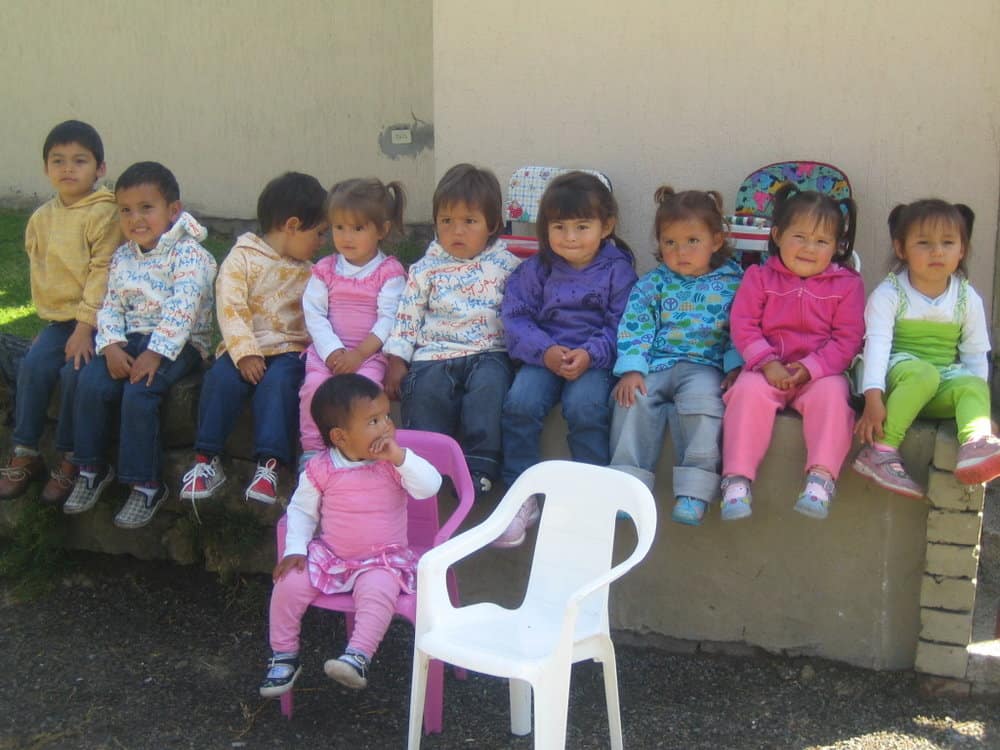
Next, we visited La Casa, the first private children’s home to be established in Colombia. We were extremely impressed with this homey, yet beautiful, clean and well-laid out orphanage set in a lovely neighborhood in central Bogotá. Samantha and I met with Ines Elvira Cuellar, the head of adoptions for La Casa, and she was as warm as she was clear and committed to finding homes for both typically developing as well as special needs children. As we toured La Casa, we saw newborns, infants, toddlers and older children. The toddlers were especially eager to see us and to share hugs. Most memorable was when a small, Afro-Colombian girl saw Samantha, who is a tall and striking black woman. The child’s face broke into an expression of wonder and joy, and she ran to Samantha with outstretched arms. It was a moving and a heartbreaking moment.
Afterwards, we headed to the outskirts of Bogotá to visit Ayúdame (translated as “help me” in Spanish). Founded 34 years ago, Ayúdame is home to 50 children, most of whom are under age seven. Maria Clemencia Marquez Gutierrez is the energetic, determined and caring woman who directs the home and the maternity shelter that is also operated under the auspices of Ayúdame. Ayúdame works with only a few agencies, and we are pleased that Maria Clemencia is adding Spence-Chapin to that roster. She makes it a point to visit the agencies with which she collaborates for adoptions every few years so that she can be assured that their assessment and preparation of families is thorough and skilled. Since Spence-Chapin takes the same care in reviewing the adoption houses with which we collaborate, we think it will be an excellent partnership.
Ayúdame operates out of a private home on three floors. The perimeter of several of the bedrooms was lined with cribs for infants; other rooms have toddler beds and bunk beds. Samantha and I were greeted by gleeful children playing and singing.
That evening, we had dinner with the full Spence-Chapin team: Manuela, Jorge Ivan (an attorney who is our deputy representative), Nora (who assists Manuela in putting together the documentation for the cases), and Marie Elena (an attorney who use to direct adoptions at ICBF and who handled a recent case for us). We heard more from them all about some of our recent cases and we shared with them news of the families now that they are back in the U.S.
On Friday morning, we drove to Chía, a rural district in Bogotá surrounded by mountains, about 45 minutes outside the city. This is the setting for Fundacion Niña Maria, the adoption house where Spence-Chapin started a granny program a year and half ago. Niña Maria has two sites in Chía: one that houses older boys, and the other that houses all the young children, as well as the older girls. Altogether, Niña Maria is home to approximately 90 children—many of whom are under the protection of the state and not available for adoption.
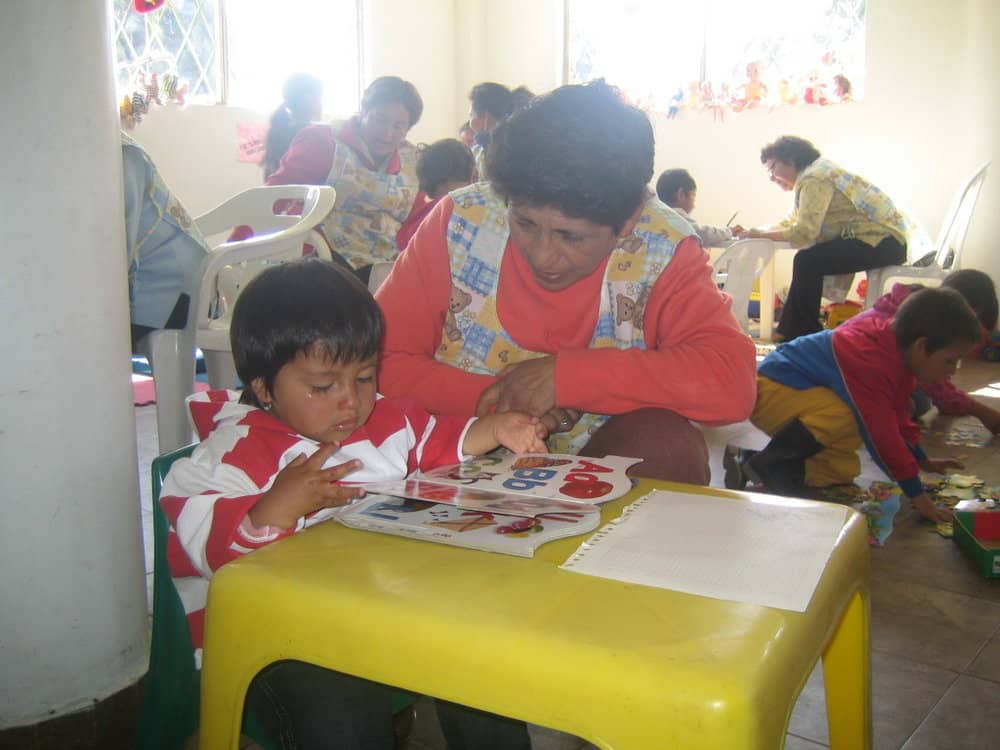
We were warmly greeted by Marlena, the founder and director of Fundacion Niña Maria, as well as many of the staff. After introductions, we were led into the building where our granny program is operated. We were all amazed and moved by the incredible sight of 12 grannies paired with 12 children, sitting at small tables or on the floor, completely engaged in their tasks together. Some were reading, some playing with blocks, some doing puzzles, some practicing forming letters or calculating sums. The children were full of smiles, hugs and affection for their grannies. These are all children who, without their grannies, would rarely get any personal attention. Because of the granny program, they spend two hours a day, five days a week, with someone who they know cares a great deal about them and who rejoices in their accomplishments. They are all thriving with the attention of the grannies, and they are making real progress in their social, emotional and physical development.
After the children left, we spoke to the grannies to thank them for their dedication to this program and to tell them that we consider their work to be extremely important. I was so filled with emotion (and so flustered) that I said, “Buenos noches” instead of “Buenos dias,” but they had a good laugh and seemed to forgive me! We met with the program staff, who have been putting great effort into planning activities for the grannies and documenting the progress of the children. They are eager to have Rita Taddonio, our director of post-adoption services, return to Chía to provide more training to the grannies and the staff (so start packing your bags, Rita!).
As I sat on the plane to return to New York, I felt satisfied and hopeful. The satisfaction comes from knowing that we have a wonderful and a dedicated team representing Spence-Chapin in Colombia: a team that understands the process of adoption and has the skills to see it through. It also comes from the knowledge that we have partnered with some very well-run, ethical adoption houses that are committed to the children in their care. We have the respect and support of ICBF. And, we are finding homes for children who need them. Now that we have laid and reinforced this foundation, the hope is that we can continue to find families (Colombian and non-Colombian) who will see this program as a viable route to building their families, who will enjoy spending time in Colombia during their adoption process, and who will embrace the process of incorporating Colombian culture into the life of their family going forward.
