
Spence-Chapin’s International Adoption Programs are in Ghana, South Africa, Colombia, Costa Rica, and Jamaica and the Eastern Caribbean. Spence-Chapin is a Hague-accredited organization with over 100 years of experience in adoption. We believe that every child deserves a family and have connected more than 4,000 children to their forever families. The Spence-Chapin Way is to guide families through every step of the adoption process and provide them with lifelong support and services.
Interested in adopting from countries other than Ghana, South Africa, Colombia, and Costa Rica, but still need a home study? Spence-Chapin offers home study services to families living in New York, New Jersey, and Arizona. Find out more here.
Please visit our WAITING CHILD PAGE to learn more about waiting children in South Africa and Colombia.
View our events calendar to register for an upcoming adoption webinar!


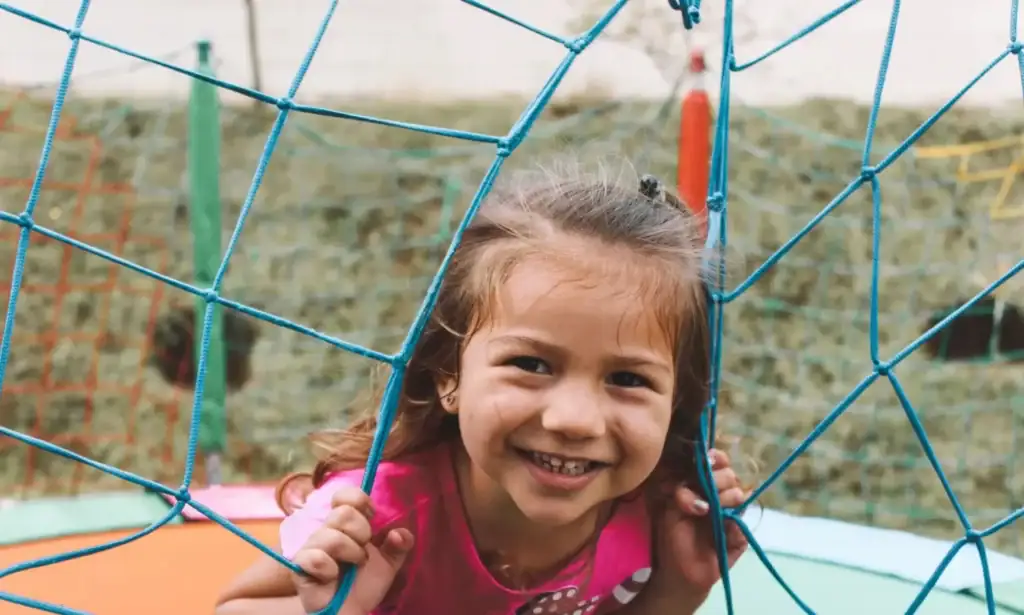


The children in the Waiting Child Program are in immediate and urgent need of an adoptive family. The Waiting Child Program offers the opportunity for prospective adoptive families to inquire about a specific child and take next steps with Spence-Chapin social workers to evaluate if it is the right fit for the family and the child.
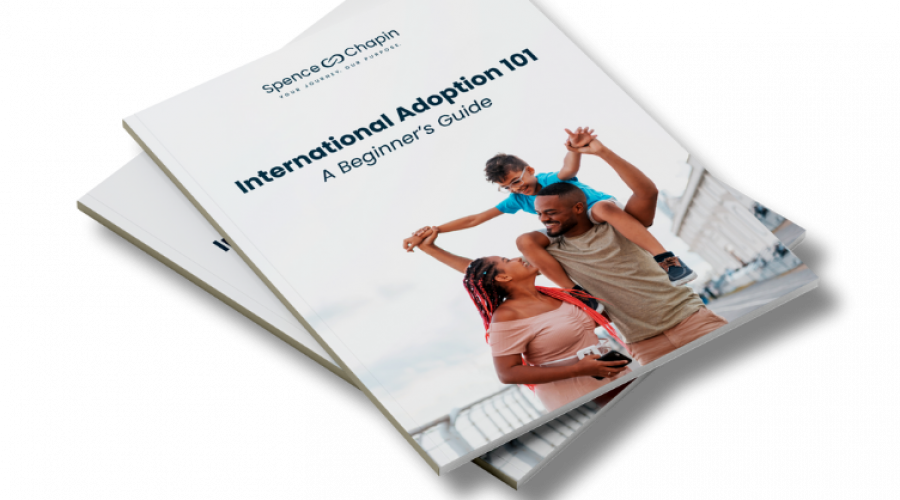
Our international Adoption 101 packet provides comprehensive, easy-to-understand information about the international adoption process, tailored to guide and support individuals exploring adoption options.

Spence-Chapin is a U.S.-based, Hague-accredited adoption agency, committed to upholding the highest ethical standards in international adoption. The Hague Convention and the Universal Accreditation Act were established to ensure that intercountry adoption is transparent, ethical, and centered on the best interests of children.
To support ethical international adoption, the U.S. Department of State designates an Accrediting Entity — the Center for Excellence in Adoption Services (CEAS) —to provide monitoring and oversight of adoption service providers. As a Hague-accredited agency, Spence-Chapin is committed to maintaining the highest standards of ethics, transparency, and child-centered care.
The Hague Convention on the Protection of Children and Co-operation in Respect of Intercountry Adoption (Convention) is an international agreement to safeguard intercountry adoptions. Concluded on May 29, 1993 in The Hague, the Netherlands, the Convention establishes international standards of practices for intercountry adoptions. The United States signed the Convention in 1994, and the Convention entered into force for the United States on April 1, 2008. Read the full text of the Convention.
Spence-Chapin is a Hague accredited agency which means we facilitate Hague adoptions and provide Hague home study services. In order to receive Hague Accreditation, Spence-Chapin must meet certain international standards. In addition, the two countries where Spence-Chapin has established international adoption programs (South Africa and Colombia) have signed the Hague Convention and are also audited annually to ensure proper adherence to standards.
Spence-Chapin does not discriminate on the basis of actual or perceived race, creed, color, ancestry, national origin, religion, sex, gender identity or expression, sexual orientation, age, disability, military status, genetics, genetic predisposition or carrier status, HIV status, marital or partnership status, familial or caregiver status, or any other legally protected status.
Spence-Chapin respects and adheres to the specific eligibility requirements of the countries where we work. To find out more about each country’s specific eligibility requirements, please visit the specific pages for the South Africa, Colombia, Jamaica and the Eastern Caribbean.
Spence-Chapin has partnered with the experts at Your Adoption Finance Coach to provide our families with free access to experts, tools and content that can take the worry out of financing your adoption. This service is available at no additional cost to families. Free financial coaching is available to families once an application has been received and approved for one of our adoption programs, including our domestic and international home study services! Please contact us to learn more.
Nov
18
05:00pm – 06:00pm
Spence-Chapin supports international adoption in various ways: we have eight International Adoption Programs open to applicants living throughout the United States, and we offer international home study and post-adoption supervision services that are open to residents of New York, New Jersey, and Arizona. Spence-Chapin is a licensed, Hague-accredited agency with over 100 years of experience in adoption! Our team of experts have guided hundreds of children and families through the international adoption process and hope we will have the opportunity to support you!
There are many different layers of eligibility requirements for prospective adoptive parents that are imposed by both the United States and a child’s birth country. Such parameters may include age, marital status, health background, and sexual orientation of prospective adoptive parents, among other factors. We’re happy to confirm that there are international adoption pathways for all types of families, including applicants in their 20s to late 50s, single men & single women, married and unmarried couples, LGBTQ+ applicants, and families of all backgrounds, races, ethnicities, and of any religion or of no religious faith.
In any international adoption into the United States, one adopting parent (or the sole parent if single) must hold U.S. citizenship.
At Spence-Chapin, we have international adoption programs in South Africa, Colombia, Costa Rica, Jamaica and the Eastern Caribbean
South Africa encourages adoption applications from single men and women, gay and lesbian applicants, and married couples living throughout the United States. Applicants 48 and older should consult with Spence-Chapin. Please read more at www.spence-chapin.org/south-africa-adoption
Colombia welcomes applications from single men and women, married couples, heterosexual and LGBTQ+ parents living throughout the United States. Spence-Chapin supports American families seeking to adopt from Colombia and has pathways for applicants with or without Colombian Heritage. Families in which one adoptive applicant – or the sole applicant if you are adopting as a single – holds a Colombian Cedula and Passport, are eligible to adopt a child without identified medical special needs. For families without Colombian Heritage, the Colombia adoption program is a great program for families seeking to adopt a child with special needs or a child who is older. Please see more at www.spence-chapin.org/colombia-adoption
Jamaica and the Eastern Caribbean welcomes applications from single men and women, as well as heterosexual married couples living throughout the United States. Unmarried couples should consult with Spence-Chapin. Our Caribbean Adoption Programs support families who are looking to adopt their relatives or children who are known to them through our Kinship & Kinship+ and supports families who do not currently have an identified child or family member they are looking to adopt, but want to grow their family through adoption, and feel the Eastern Caribbean would be a good fit.
Absolutely! In addition to our international placement programs in South Africa, Colombia, Costa Rica, Jamaica and the Eastern Caribbean, Spence-Chapin is able to provide pre-adoption support and international, Hague-compliant home study services to families living in New York, New Jersey, or Arizona who are pursuing adoption from countries around the world. Our home studies are of the highest caliber, and meet the highest legal regulations set for international adoption.
Recently, we have supported families adopting from Bangladesh, India, Liberia, Nigeria, Hungary – and more!
Regardless of the path you ultimately choose to grow your family, Spence-Chapin is able to provide pre-adoption support through international home study services, parent preparation and training, support groups and clinical services. We support countless parents working with different agencies for placement.
In order for our team to accept your international home study application, you will need to identify a primary provider agency. A primary provider is a Hague accredited agency in the United States that will help you navigate the inter-country laws and documentation you will need to complete your international adoption. We recommend viewing potential primary providers through CEAS or the National Council For Adoption. The United States Department of State may also be a resource for you.
If you reside in New York, New Jersey, or Arizona and are ready to begin the international home study assessment, our Client Services team would be happy to speak with you about the next steps! We can be reached by phone at 212-400-8150 or email at [email protected] for more information. We also invite you to visit our home study services webpage to download our home study applications and fee schedules, as well as view our Home Study FAQs, which provides helpful information as you begin your adoption journey.
The Hague Convention sets standards for the process, ethics, and practice of placing children in adoptive families. The Hague Convention is designed to ensure that international adoption is a transparent, ethical process with an established infrastructure to protect and support children and families. As of 2008, the United States has ratified and implemented the Hague Convention, and all intercountry adoptions will follow regulatory requirements which ensure ethics and transparency for the adoption process. Spence-Chapin is a Hague accredited agency which authorizes us to facilitate intercountry adoptions from both Hague and non-Hague countries, assuring the same level of safeguards in all cases.
“Hague Countries” are countries who have signed and implemented the Hague Convention on International Adoption, just like the United States. “Non-Hague Countries” are countries who have not signed or implemented the Hague Convention on International Adoption. It is possible to adopt from Hague and Non-Hague countries; for example, South Africa, Colombia, and Costa Rica are all Hague countries, whereas Jamaica and the Eastern Caribbean countries from which we place are non-Hague countries.
While your adoption agency will ensure the same oversight, safeguards and ethical practices in your adoption whether it is from a Hague or non-Hague country—adoptions from Hague and Non-Hague countries go through different immigration processes. Families adopting from Hague countries will undergo the I-800 visa process, and families adopting from non-Hague countries will undergo the I-600 visa process. You can read more about the adoption immigration requirements and processes on the U.S. Department of State website: https://travel.state.gov/content/travel/en/Intercountry-Adoption/Adoption-Process/immigrant-visa-process.html
The first step towards joining a Spence-Chapin International Adoption Program is to attend a program webinar or schedule an individual program consultation by emailing [email protected] or calling 212-400-8150. From there, families are welcome to apply to the program that feels like the best fit for them. After application acceptance, families will be guided through the home study process which is comprised of paperwork, trainings, and interviews. After the home study is complete, your adoption agency will guide you in the proper application with USCIS and will also help you build your country-specific documents, often called a dosser.
Once the dossier has been approved by the country, families may wait a few months or a few years before they receive a referral of a child that they have been deemed to be a match for, based off the child characteristics they are open to and approved for within the home study. Families adopting from
Costa Rica may wait 9-18 months for their referral. Families adopting from South Africa and Colombia may wait approximately 12-24 months for their referral, and families adopting from the Eastern Caribbean may wait approximately 24-36 months for a referral. Families with an openness to a greater level of special needs might wait shorter and families with a narrower openness to special characteristics might wait longer. Families pursuing the adoption of a waiting child may see a faster timeframe in this phase. For families pursuing a kinship adoption or the adoption of a child otherwise known to them, in this phase the child’s background eligibility for adoption is being assessed and documented, a process which can take several months.
After families accept their referral, they enter a phase of preparing for travel and adoption. Since there are multiple governmental approvals after accepting a referral before proceeding to placement and adoption, families will anticipate several months after acceptance of referral to travel; in the South Africa program we prepared families for as long as 9-18 months from acceptance of referral to travel. In-country travel timeframes vary country to country; South Africa adoptions may take about 12+ weeks in-country, Colombia adoptions may be about 4-6 weeks in-country, in Costa Rica we prepare
families for approximately 5-7 weeks in country, and adoptions from the Eastern Caribbean will include a minimum of two in-country trips ranging between 2-5 weeks.
Once you are home with your child, you will receive support in the form of post-adoption or post-placement visits by the agency.
In general, the international adoption process is a multi-year process. While we do see potential average timeframes for certain parts of the adoption process, it’s important to note that timeframes in entirety are challenging to predict; the length of each family’s adoption can be unique and individual to them!
Families adopting internationally can anticipate a range of adoption expenses; some fees are very specific to a service, provider, or adoption process, and other fees will range, such as third-party and travel expenses. To learn more about adoption expenses for each of Spence-Chapin’s International Adoption Programs, we invite you to visit our International Adoption Inquiry Packet, which provides sample Master Fee Agreements and Fee disclosures for your review.
Choosing a country for international adoption is a personal and intimate choice! Families may start by asking themselves questions like, “What type of child to I envision parenting?”, “Am I open to adopting one child, or siblings?”, “Am I hoping to adopt a child within a particular age range?”, and “What pre-identified characteristics or special needs might I be a good fit for?”.
As we have noted, a child’s birth country can set their own eligibility requirements for prospective adoptive parents, which may impact the countries available to families. To learn more about which countries are open to international adoption with the United States, you can visit the U.S. Department of State website.
To identify primary provider agencies who have adoption programs in countries that are open to the United States, we recommend utilizing CEAS and the National Council For Adoption search directory tools. Primary provider agencies with international adoption programs in specific countries will be able to share more information like what their program entails, who their international partners are, who the children in need of adoption are, and what the requirements and process will look like.
Many children waiting for adoption often have one or more pre-identified needs and special characteristics, due to their unique circumstances. These special characteristics can range from social, emotional, developmental, educational, behavioral, physical, or medical needs; a child’s age or even having a sibling could be a special need. We also see that many children have histories of abuse, neglect, and trauma, impacting their developmental, emotional and behavioral needs.
Pre-identified needs and special characteristics are big, broad terms, and exist on wide spectrums; we’re happy to speak about the specifics of children placed through our programs and the types of families they need to thrive.
Spence-Chapin offers a lifetime of support for children and families connected to adoption! Our Family & Community Support Department offers adoption competent and focused therapy services (for NY and NJ residents) and consultation services (for families worldwide), as well as virtual and in-person Community Programming for adopted children, teens, adults and their families. We invite you to visit our Therapy & Consultations webpage to learn more about our adoption competent clinical services, and our Community Programming webpage to learn more about our lifetime of programming!
There are many ways families can begin preparing themselves for international adoption! We invite you to listen to Spence-Chapin’s Podcast to hear from adopted people, birth parents, adoptive parents, and adoption professionals.
National Council For Adoption, Adoption Learning Partners, Creating a Family, Families Rising, and Raise The Future can be great educational resources and resources Gays with Kids.
When we are speaking about international adoption at Spence-Chapin, we are referring to U.S. citizens, residing in the United States, who are adopting children residing outside the U.S.
Spence-Chapin supports international adoption in various ways: we have eight International Adoption Programs open to applicants living throughout the United States, and we offer international home study and post-adoption supervision services that are open to residents of New York, New Jersey, and Arizona. Spence-Chapin is a licensed, Hague-accredited agency with over 100 years of experience in adoption! Our team of experts have guided hundreds of children and families through the international adoption process and hope we will have the opportunity to support you!
There are many different layers of eligibility requirements for prospective adoptive parents that are imposed by both the United States and a child’s birth country. Such parameters may include age, marital status, health background, and sexual orientation of prospective adoptive parents, among other factors. We’re happy to confirm that there are international adoption pathways for all types of families, including applicants in their 20s to late 50s, single men & single women, married and unmarried couples, LGBTQ+ applicants, and families of all backgrounds, races, ethnicities, and of any religion or of no religious faith.
In any international adoption into the United States, one adopting parent (or the sole parent if single) must hold U.S. citizenship.
At Spence-Chapin, we have international adoption programs in Ghana, South Africa, Colombia, Costa Rica, Jamaica and the Eastern Caribbean
South Africa encourages adoption applications from single men and women, gay and lesbian applicants, and married couples living throughout the United States. Applicants 48 and older should consult with Spence-Chapin. Please read more at
Colombia welcomes applications from single men and women, married couples, heterosexual and LGBTQ+ parents living throughout the United States. Spence-Chapin supports American families seeking to adopt from Colombia and has pathways for applicants with or without Colombian Heritage. Families in which one adoptive applicant – or the sole applicant if you are adopting as a single – holds a Colombian Cedula and Passport, are eligible to adopt a child without identified medical special needs. For families without Colombian Heritage, the Colombia adoption program is a great program for families seeking to adopt a child with special needs or a child who is older.
Costa Rica welcomes single applicants as well as married couples and is open to gay and lesbian parents. Prospective parents ages 25-60 years old are eligible to adopt from Costa Rica. Costa Rica welcomes adoption by applicants who are already parenting, as well as those who are not yet parenting.
Jamaica and the Eastern Caribbean welcomes applications from single men and women, as well as heterosexual married couples living throughout the United States. Unmarried couples should consult with Spence-Chapin. Our Caribbean Adoption Programs support families who are looking to adopt their relatives or children who are known to them through our Kinship & Kinship+ and supports families who do not currently have an identified child or family member they are looking to adopt, but want to grow their family through adoption, and feel the Eastern Caribbean would be a good fit.
Ghana welcomes applications from married applicants living throughout the United States. Ghana permits single females to adopt if they are a Ghanaian citizen. Ghana permits single males to adopt if they are a Ghanaian citizen and if the child to be adopted is a close relative. Applicants must be between the ages of 25 and 55, and the youngest applicant must be at least 21 years older than the child to be adopted. With special permission and if adopting a relative, the Ghanaian government may extend the age range of prospective adoptive parents to 25-65. Couples with 5 or fewer children are welcome to apply.
Absolutely! In addition to our international placement programs in Ghana, South Africa, Colombia, Costa Rica, Jamaica and the Eastern Caribbean, Spence-Chapin is able to provide pre-adoption support and international, Hague-compliant home study services to families living in New York, New Jersey, or Arizona who are pursuing adoption from countries around the world. Our home studies are of the highest caliber, and meet the highest legal regulations set for international adoption.
Recently, we have supported families adopting from Bangladesh, India, Liberia, Nigeria, Hungary – and more!
Regardless of the path you ultimately choose to grow your family, Spence-Chapin is able to provide pre-adoption support through international home study services, parent preparation and training, support groups and clinical services. We support countless parents working with different agencies for placement.
In order for our team to accept your international home study application, you will need to identify a primary provider agency. A primary provider is a Hague accredited agency in the United States that will help you navigate the inter-country laws and documentation you will need to complete your international adoption. We recommend viewing potential primary providers through CEAS or the National Council For Adoption. The United States Department of State may also be a resource for you.
If you reside in New York, New Jersey, or Arizona and are ready to begin the international home study assessment, our Client Services team would be happy to speak with you about the next steps! We can be reached by phone at 212-400-8150 or email at [email protected] for more information. We also invite you to visit our home study services webpage to download our home study applications and fee schedules, as well as view our Home Study FAQs, which provides helpful information as you begin your adoption journey.
The Hague Convention sets standards for the process, ethics, and practice of placing children in adoptive families. The Hague Convention is designed to ensure that international adoption is a transparent, ethical process with an established infrastructure to protect and support children and families. As of 2008, the United States has ratified and implemented the Hague Convention, and all intercountry adoptions will follow regulatory requirements which ensure ethics and transparency for the adoption process. Spence-Chapin is a Hague accredited agency which authorizes us to facilitate intercountry adoptions from both Hague and non-Hague countries, assuring the same level of safeguards in all cases.
“Hague Countries” are countries who have signed and implemented the Hague Convention on International Adoption, just like the United States. “Non-Hague Countries” are countries who have not signed or implemented the Hague Convention on International Adoption. It is possible to adopt from Hague and Non-Hague countries; for example, South Africa, Colombia, Costa Rica, and Ghana are all Hague countries, whereas Jamaica and the Eastern Caribbean countries from which we place are non-Hague countries.
While your adoption agency will ensure the same oversight, safeguards and ethical practices in your adoption whether it is from a Hague or non-Hague country—adoptions from Hague and Non-Hague countries go through different immigration processes. Families adopting from Hague countries will undergo the I-800 visa process, and families adopting from non-Hague countries will undergo the I-600 visa process. You can read more about the adoption immigration requirements and processes on the U.S. Department of State website: https://travel.state.gov/content/travel/en/Intercountry-Adoption/Adoption-Process/immigrant-visa-process.html
The first step towards joining a Spence-Chapin International Adoption Program is to attend a program webinar or schedule an individual program consultation by emailing [email protected] or calling 212-400-8150. From there, families are welcome to apply to the program that feels like the best fit for them. After application acceptance, families will be guided through the home study process which is comprised of paperwork, trainings, and interviews. After the home study is complete, your adoption agency will guide you in the proper application with USCIS and will also help you build your country-specific documents, often called a dosser.
Once the dossier has been approved by the country, families may wait a few months or a few years before they receive a referral of a child that they have been deemed to be a match for, based off the child characteristics they are open to and approved for within the home study. Families adopting from Costa Rica may wait 9-18 months for their referral. Families adopting from Ghana may wait approximately 8-24 months for a referral. Families adopting from South Africa and Colombia may wait approximately 12-24 months for their referral, and families adopting from the Eastern Caribbean may wait approximately 24-36 months for a referral. Families with an openness to a greater level of special needs might wait shorter and families with a narrower openness to special characteristics might wait longer. Families pursuing the adoption of a waiting child may see a faster timeframe in this phase. For families pursuing a kinship adoption or the adoption of a child otherwise known to them, in this phase the child’s background eligibility for adoption is being assessed and documented, a process which can take several months.
After families accept their referral, they enter a phase of preparing for travel and adoption. Since there are multiple governmental approvals after accepting a referral before proceeding to placement and adoption, families will anticipate several months after acceptance of referral to travel; in the South Africa program, we prepare families for as long as 5-12 months from acceptance of referral to travel. In the Costa Rica program, we prepare families for 5-9 months from acceptance to travel. The Ghana program is unique in that travel typically occurs within weeks of the official referral acceptance. In-country travel timeframes vary country to country; South Africa adoptions may take about 12+ weeks in-country, Colombia adoptions may be about 4-6 weeks in-country, Costa Rica adoptions can typically range 5-7 weeks in-country, Ghana adoptions include a total of 1-3 trips to Ghana over a span of 4-6 months, offering flexibility with specific focus on parent/child bonding; and adoptions from the Eastern Caribbean will include a minimum of two in-country trips ranging between 2-5 weeks.
Once you are home with your child, you will receive support in the form of post-adoption or post-placement visits by the agency.
In general, the international adoption process is a multi-year process. While we do see potential average timeframes for certain parts of the adoption process, it’s important to note that timeframes in entirety are challenging to predict; the length of each family’s adoption can be unique and individual to them!
Families adopting internationally can anticipate a range of adoption expenses; some fees are very specific to a service, provider, or adoption process, and other fees will range, such as third-party and travel expenses. To learn more about adoption expenses for each of Spence-Chapin’s International Adoption Programs, we invite you to visit our International Adoption Inquiry Packet, which provides sample Master Fee Agreements and Fee disclosures for your review.
Choosing a country for international adoption is a personal and intimate choice! Families may start by asking themselves questions like, “What type of child to I envision parenting?”, “Am I open to adopting one child, or siblings?”, “Am I hoping to adopt a child within a particular age range?”, and “What pre-identified characteristics or special needs might I be a good fit for?”.
As we have noted, a child’s birth country can set their own eligibility requirements for prospective adoptive parents, which may impact the countries available to families. To learn more about which countries are open to international adoption with the United States, you can visit the U.S. Department of State website.
To identify primary provider agencies who have adoption programs in countries that are open to the United States, we recommend utilizing CEAS and the National Council For Adoption search directory tools. Primary provider agencies with international adoption programs in specific countries will be able to share more information like what their program entails, who their international partners are, who the children in need of adoption are, and what the requirements and process will look like.
Many children waiting for adoption often have one or more pre-identified needs and special characteristics, due to their unique circumstances. These special characteristics can range from social, emotional, developmental, educational, behavioral, physical, or medical needs; a child’s age or even having a sibling could be a special need. We also see that many children have histories of abuse, neglect, and trauma, impacting their developmental, emotional and behavioral needs.
Pre-identified needs and special characteristics are big, broad terms, and exist on wide spectrums; we’re happy to speak about the specifics of children placed through our programs and the types of families they need to thrive.
Spence-Chapin offers a lifetime of support for children and families connected to adoption! Our Family & Community Support Department offers adoption competent and focused therapy services (for NY and NJ residents) and consultation services (for families worldwide), as well as virtual and in-person Community Programming for adopted children, teens, adults and their families. We invite you to visit our Therapy & Consultations webpage to learn more about our adoption competent clinical services, and our Community Programming webpage to learn more about our lifetime of programming!
There are many ways families can begin preparing themselves for international adoption! We invite you to listen to Spence-Chapin’s Podcast to hear from adopted people, birth parents, adoptive parents, and adoption professionals.
National Council For Adoption, StageWise Parenting, Creating a Family, Families Rising, and Raise The Future can be great educational resources and resources Gays with Kids.
Read stories about Spence-Chapin families adopting from South Africa on our blog.
Welcome a child or siblings from Colombia into your home for a five-week stay through our Host-to-Adopt Program—open to families in New York, New Jersey, Arizona, and Florida! This unique program gives children and families the opportunity to get to know one another with the intent of adoption.
BEFORE YOU GO
Subscribe to stay up to date with new adoption
resources, guides, events and more.
Waiting Children Profiles
Thank you for your interest in adopting through Spence-Chapin! We are able to share the profiles of children who are considered to be the most in need and are waiting internationally to be matched with an adoptive family. The children featured on this page have been waiting for the longest to find families and consist of children who are older, part of a sibling group, or children with a diagnosed medical condition. In order to respect the privacy of these children, this page has been password protected.
Spence-Chapin takes the privacy rights of the children that we are seeking to place very seriously, and share the profile with you under the following conditions:
ACKNOWLEDGEMENT OF PASSWORD ACCESS
That you acknowledge and understand that
1. Misuse of the content, and/or linking to any sites that reflect practices that involve the sale, abduction, exploitation, or trafficking of children is strictly prohibited.
2. You have been given limited access to confidential information in the form of images that you will not disclose to any person or in any manner that is inconsistent with applicable policies and procedures of Spence-Chapin Services to Families and Children.
3. The confidentiality obligation shall continue indefinitely, including at all times after my association with Spence-Chapin Services to Families and Children.
4. You are not permitted to release, copy, distribute, or sell any of these images to third parties in any form.
5. Impermissible disclosure of the images may result in legal actions being taken against you, by or on behalf of that person.
6. You are doing this freely, voluntarily and with a full understanding of what you are agreeing to by entering/accessing this blog.
7. Thank you for your interest in providing a loving home for a waiting child! We look forward to connecting with you soon to continue discussing adoption paths at Spence-Chapin. We hope that you like us on Facebook, follow us on twitter, and keep up with our families through our adoption blog!
Warm regards,
The Adoption Team at Spence-Chapin
Phone: 212-400-8150
Email: [email protected]